
ThreatConnect
Admin Settings IA & Redesign
Role
Lead Designer on Project
Cross-Functional Partners
Frontend Engineers, Product Management, & Customer Success Leads
Core Focus
Information Architecture (IA), Complex Data Consolidation, Enterprise Platform Scalability, & Administrative Design
Overview & Challenge
Project Summary
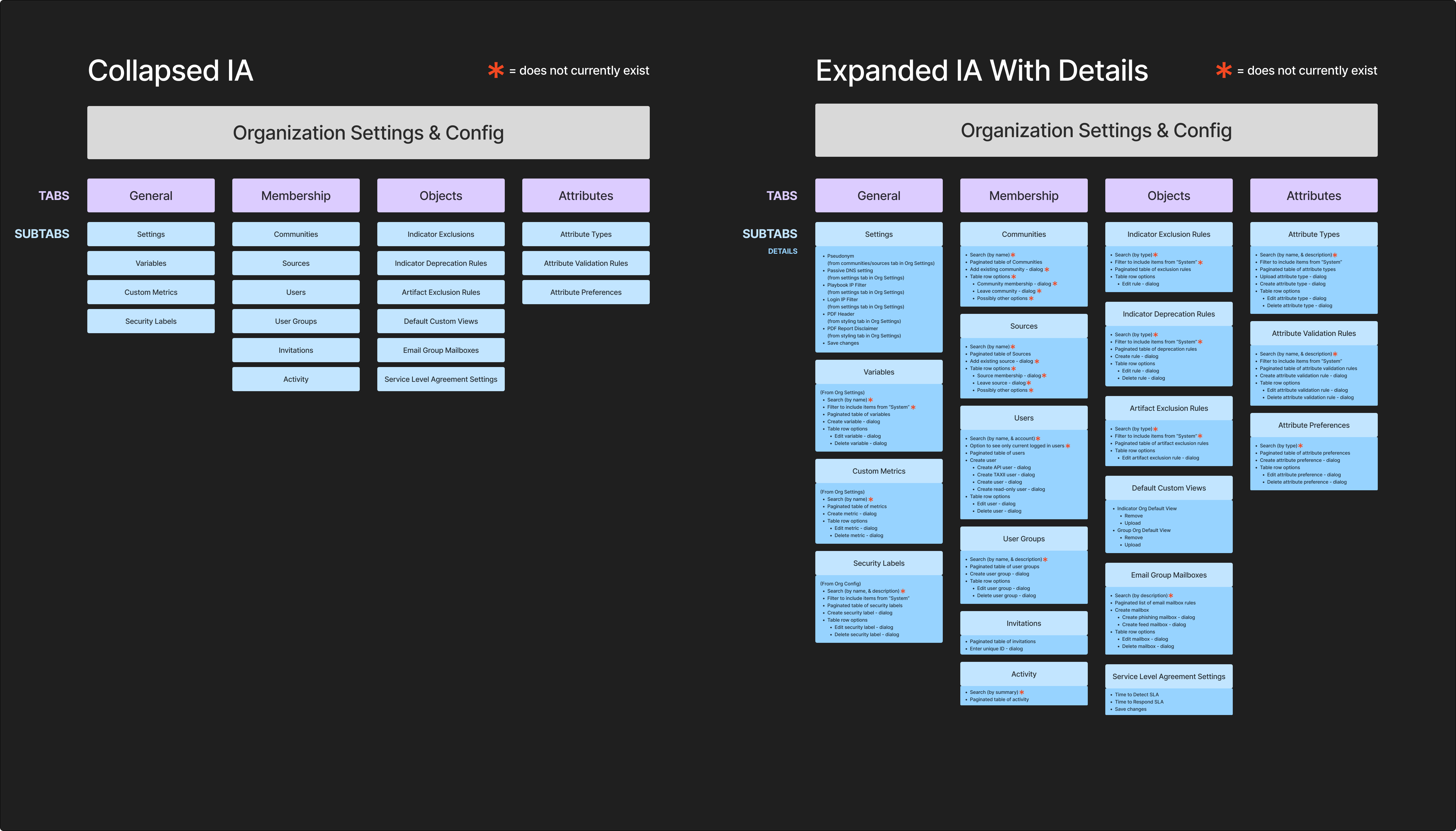
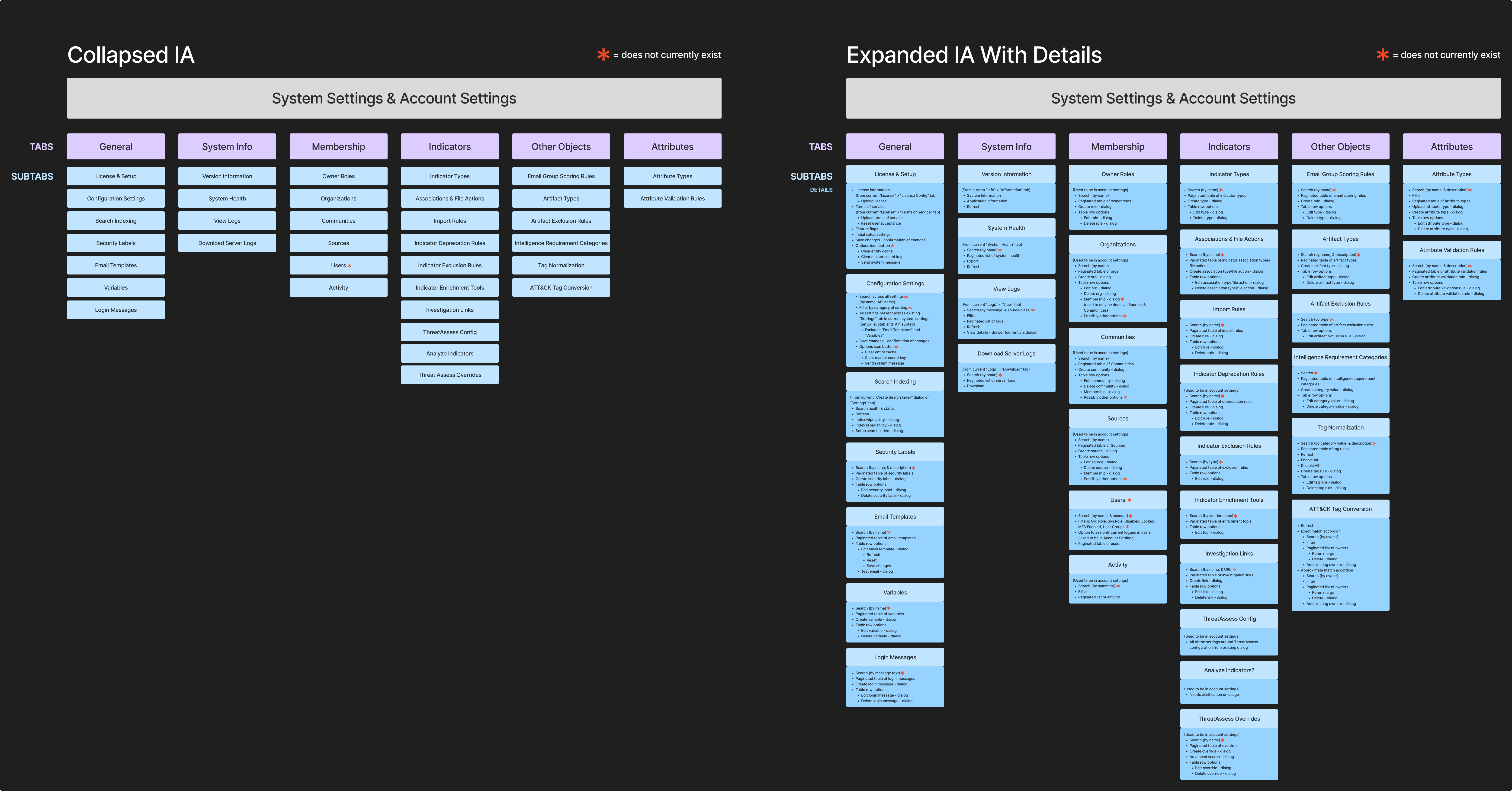
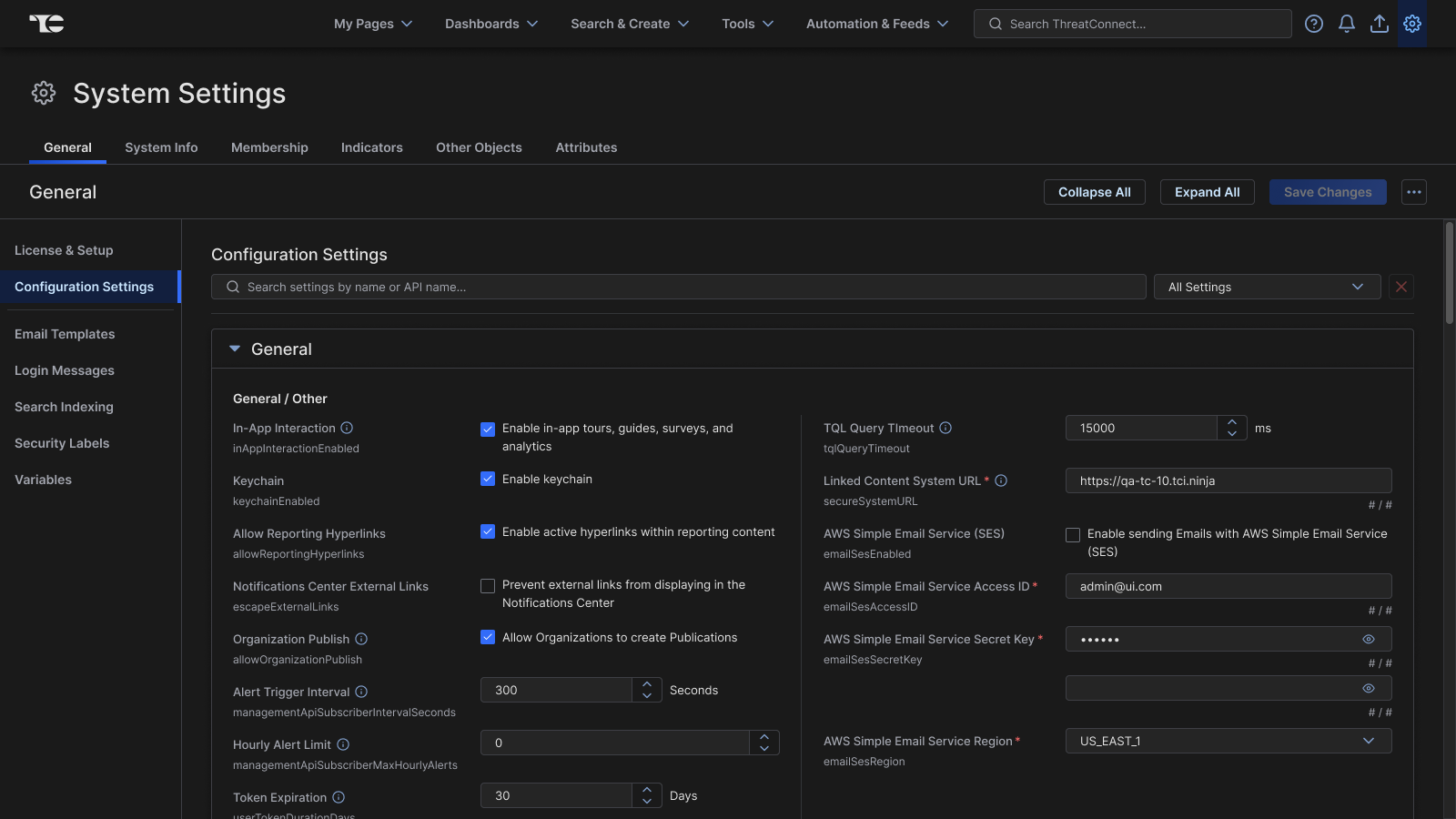
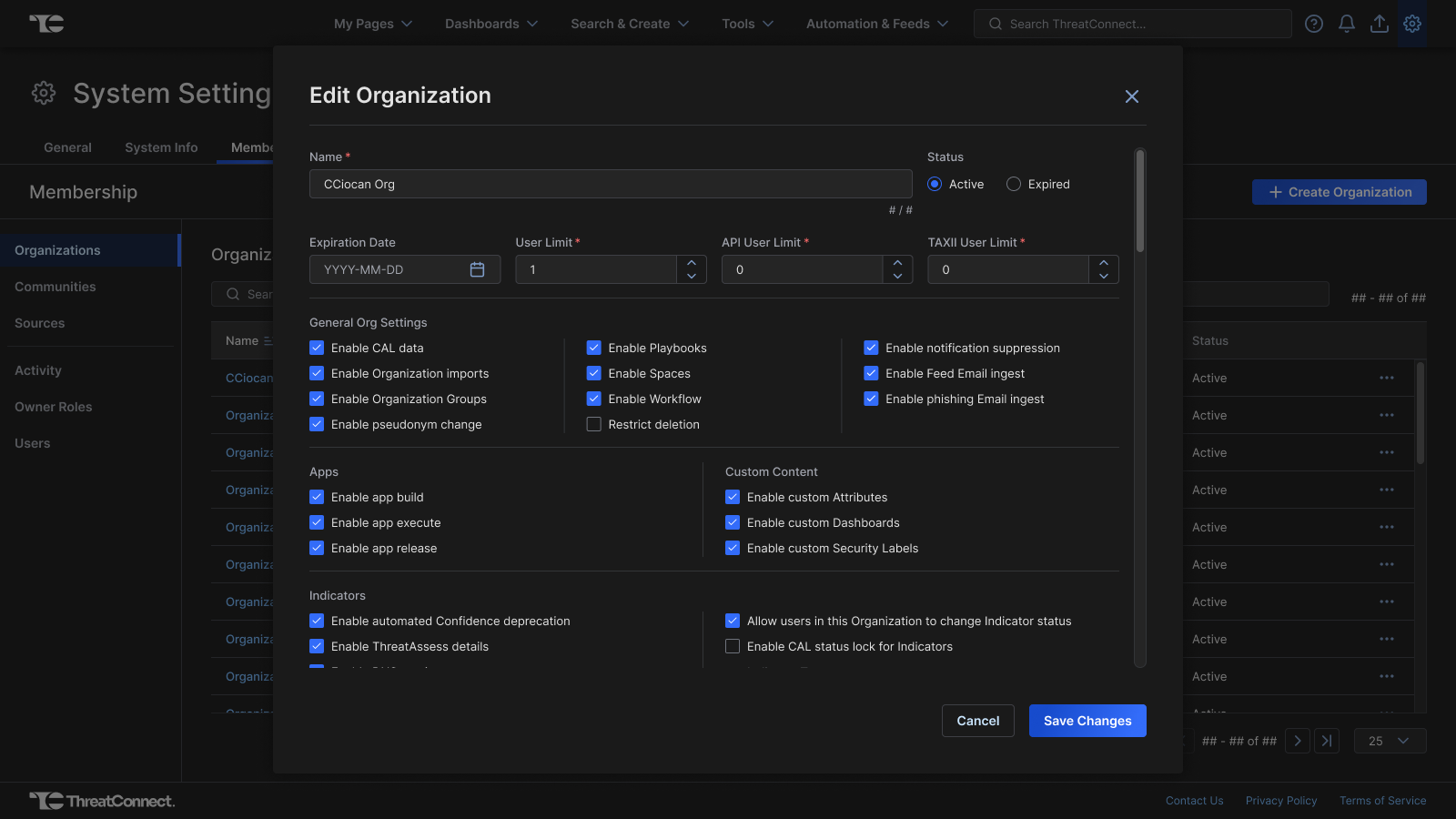
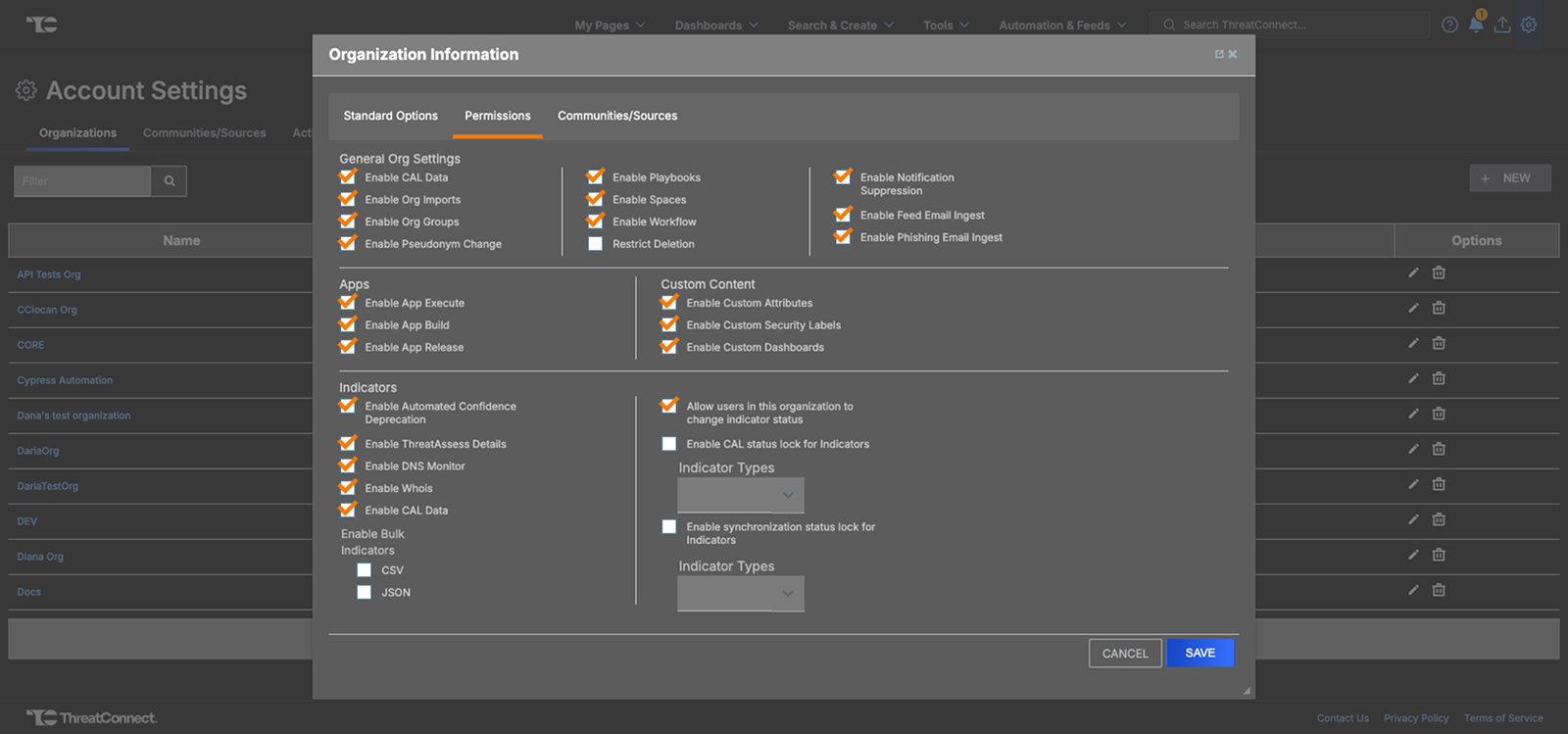
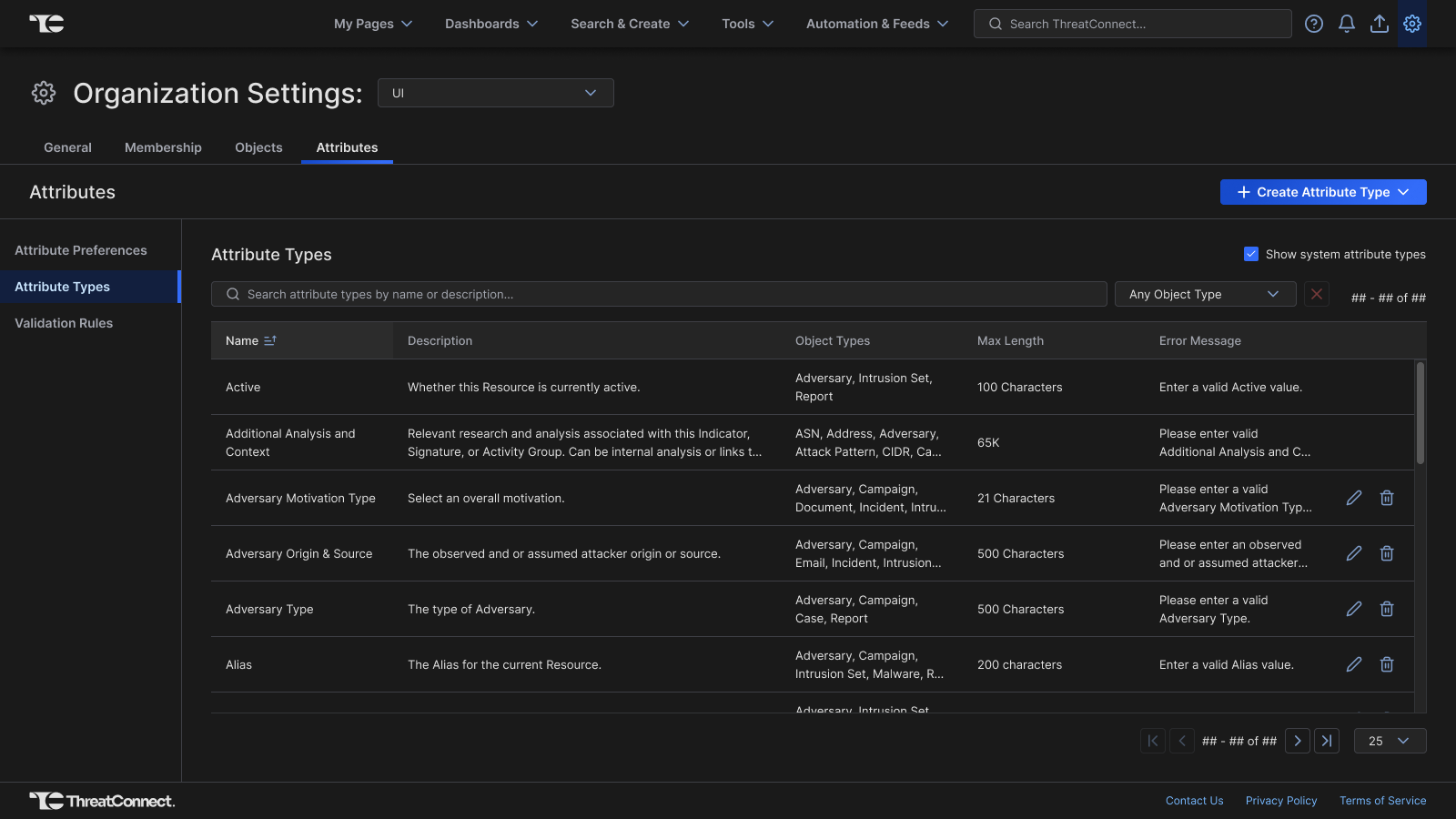
The administrative frameworks of the ThreatConnect Threat Intelligence Platform (TIP) were developed over a decade ago in an ad-hoc manner, leading to massive bloat, visual fragmentation, and intense cognitive load for both internal and external users. To solve this, I led a massive information architecture overhaul, consolidating four separate, disconnected settings environments into two unified, scalable administrative hubs. I completely overhauled 54 unique administrative layouts to align with our centralized enterprise design system while systematically introducing high-utility search and filtering mechanics across the board.
The Challenge
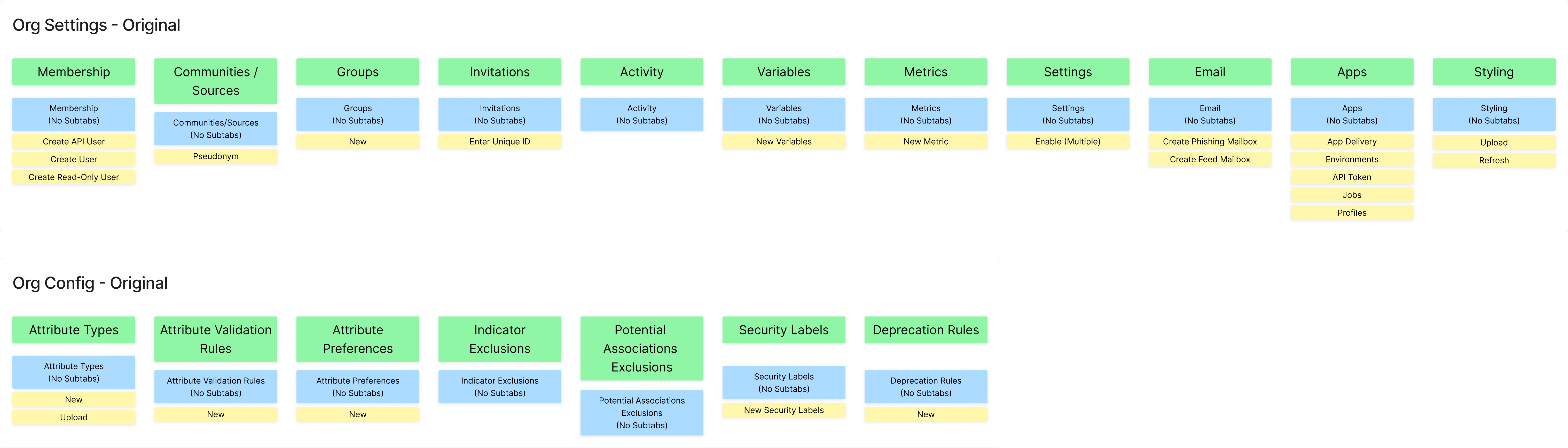
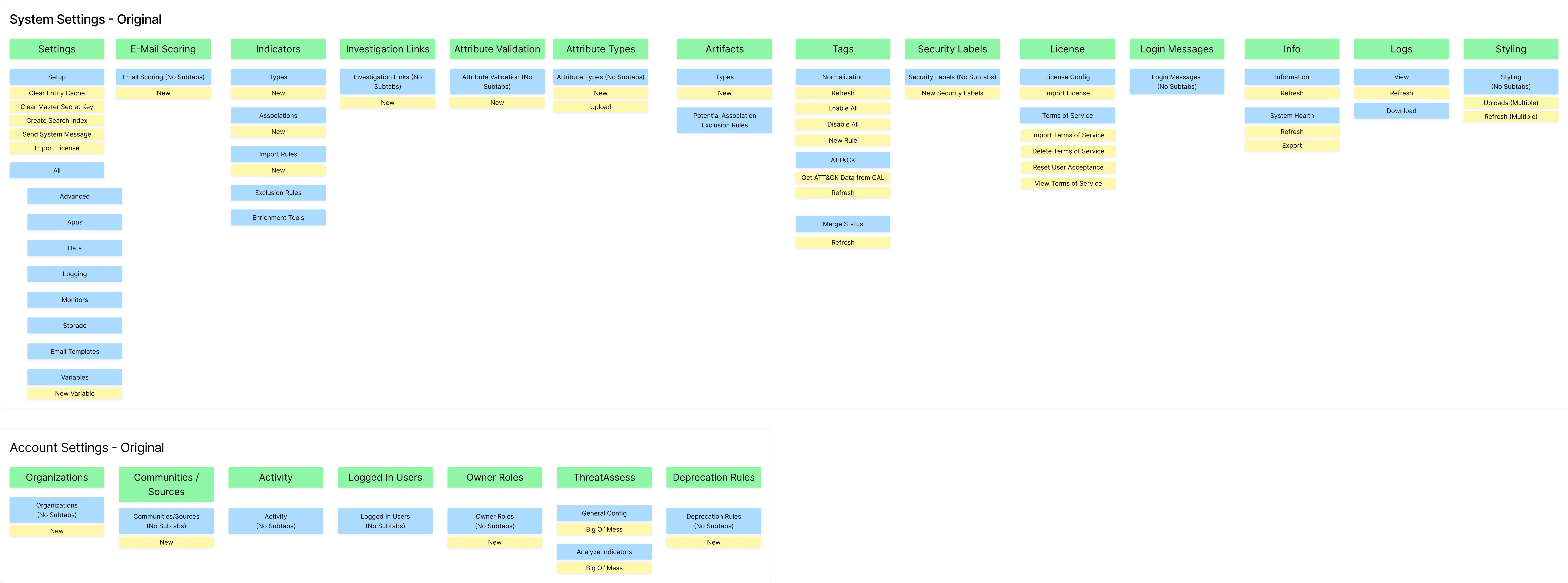
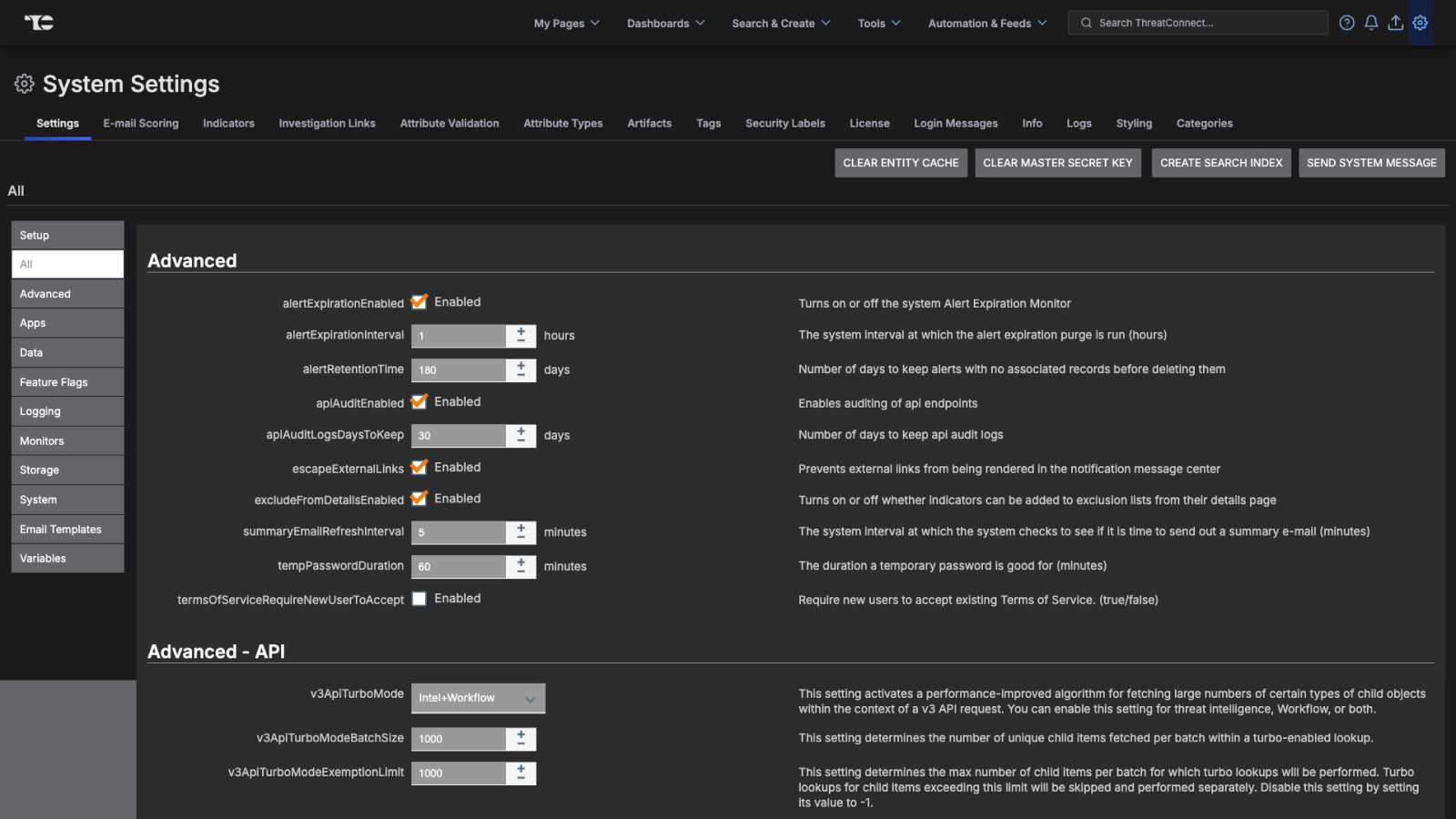
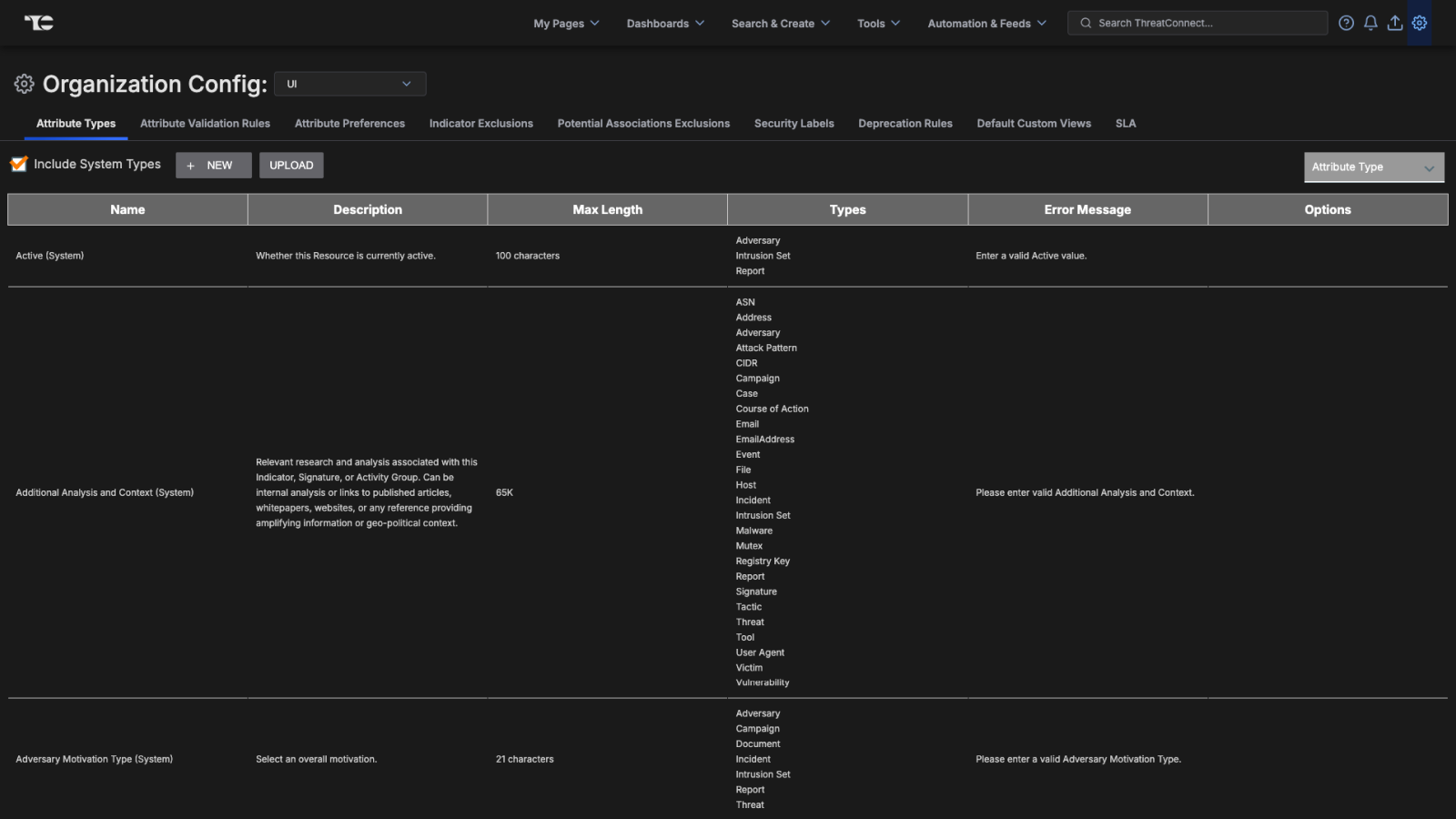
Prior to the overhaul, system administrators were forced to navigate a dizzying labyrinth of 14 main tabs and 33 subtabs in one application zone, plus an additional 7 main tabs and 8 subtabs in another. Click telemetry data verified massive user confusion, with admins continuously bouncing between redundant configuration zones to manage basic settings.
To build a truly sustainable hierarchy, I shifted the platform from broad, flat top-level tab bloat to a deeply focused, nested structure engineered explicitly for future enterprise product expansion. The 17 main tabs of org admin settings, alongside the 21 main tabs and 41 subtabs of system admin settings, were entirely restructured into a logical, highly digestible format.
Process & Execution
Data-Driven Restructuring
I conducted an exhaustive audit of historical click logs and ran validation sessions with Customer Success teams to group scattered data tables (such as Attribute Types and System Information) into intuitive, high-level categories.
Engineering Handoff
To ensure frictionless delivery across a 54-page layout migration, I organized the final architecture into iterative design batches. Each block was handed off alongside comprehensive requirements, streamlining frontend sprint planning.
Stakeholder Validation
The updated layout architecture was formally audited & approved by the Customer Success team. They confirmed that the new structure successfully resolved years of documented user pain points, rendering the configuration process significantly more intuitive.
Back to Work List