
ThreatConnect
Agentic Chat
Role
Co-lead Designer on Project
Cross-Functional Partners
Co-lead Designer, Product Management, Frontend Engineers & AI/LLM Engineers
Core Focus
Conversational UX Patterns, Prompt Engineering Guardrails, Security Compliance, & Data Analytics Loops
Overview & Challenge
Project Summary
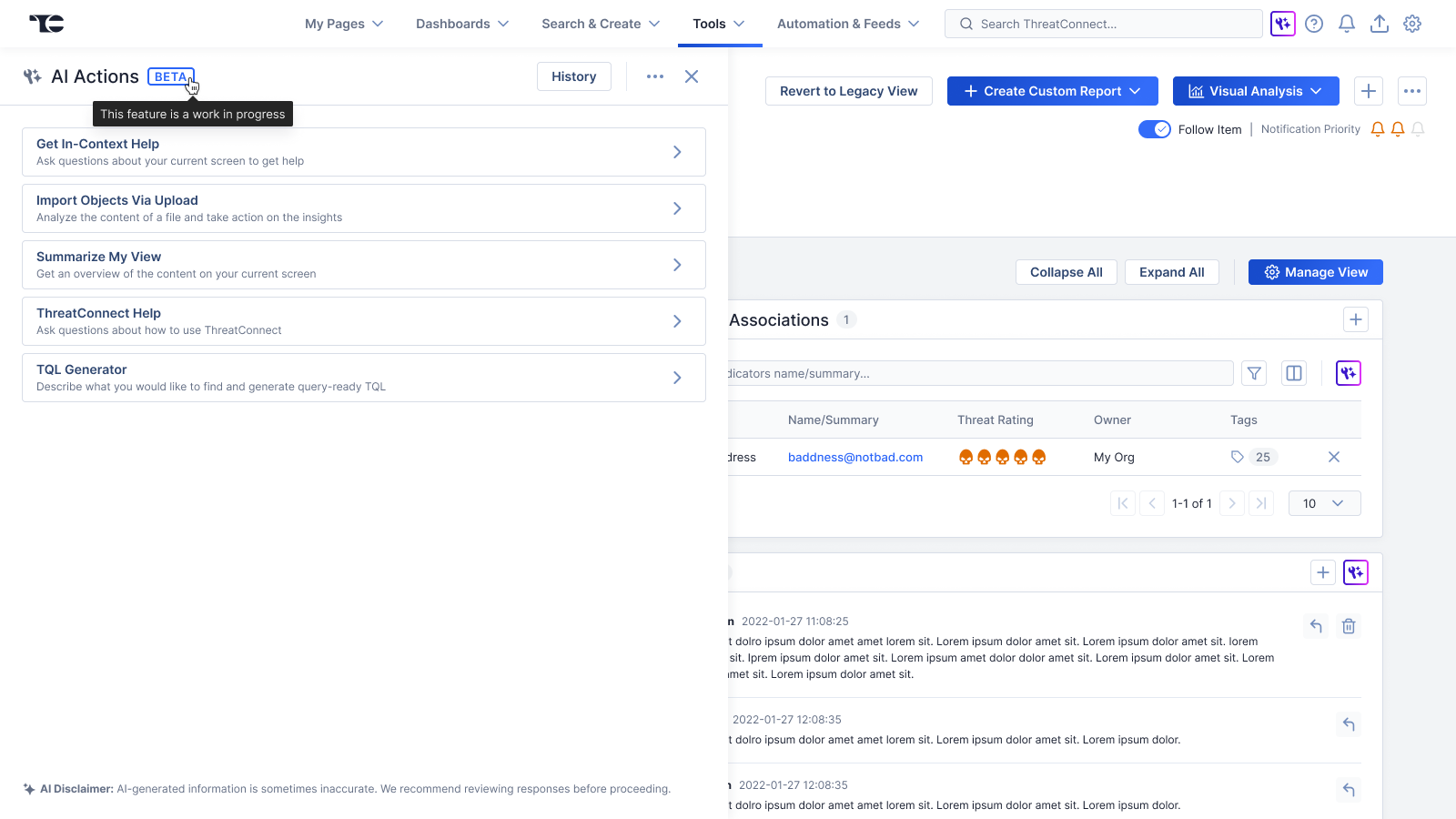
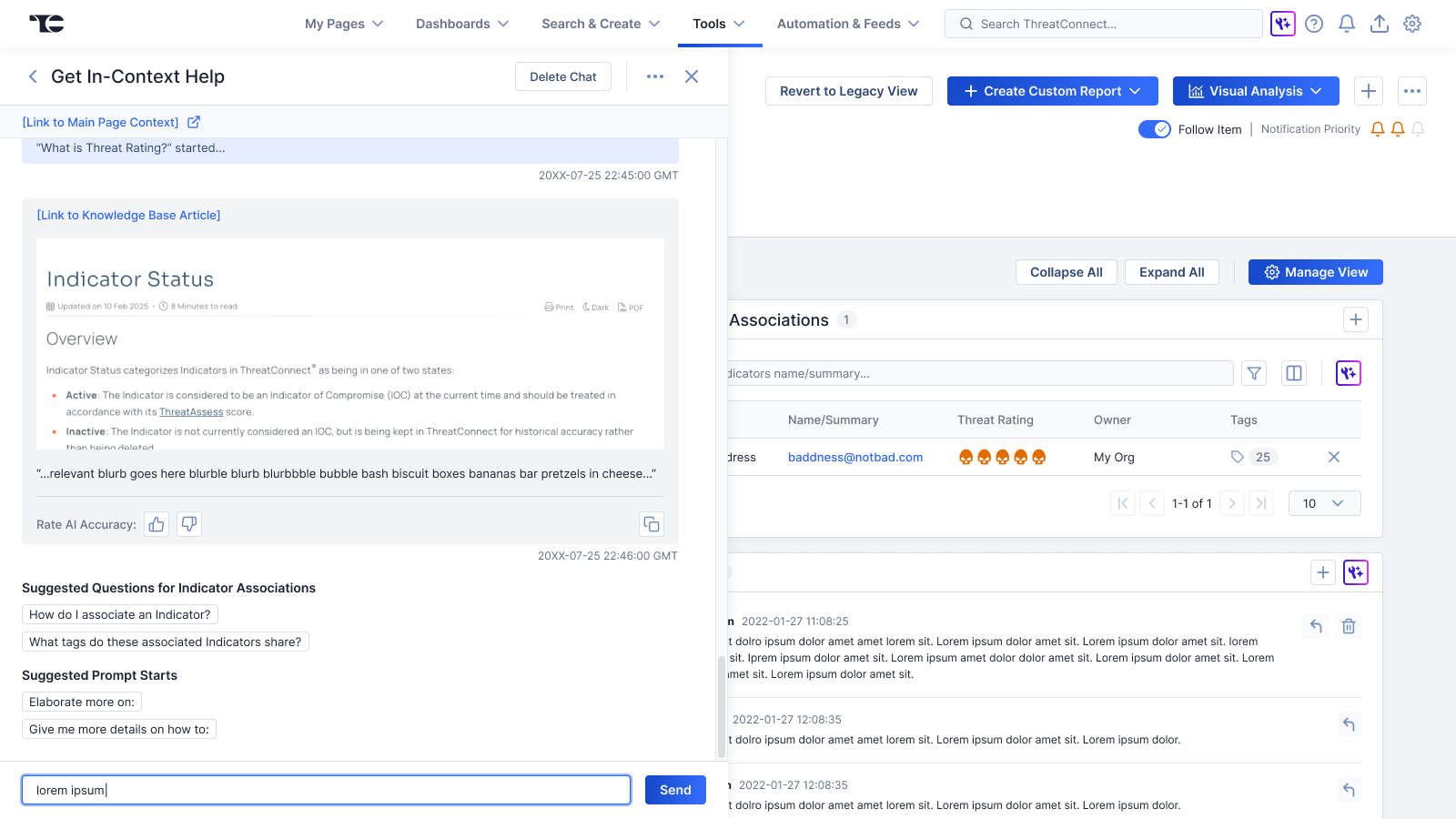
As artificial intelligence emerged as a crucial product capability, it became critical to architect a native, agentic chat interface within the ThreatConnect Threat Intelligence Platform (TIP). Serving as a Co-lead, I worked collaboratively with the other co-lead designer to architect the end-to-end user experience for a secure, conversational assistant tightly coupled to ThreatConnect’s internal knowledge base. This critical architecture allowed enterprise security analysts to surface context-rich technical documentation instantly and command automated platform actions on their behalf without compromising their organization’s sensitive data.
The Challenge
Incorporating generative AI into a highly secure, private enterprise environment introduces extreme trust, safety, and adoption hurdles. Enterprise threat analysts frequently demonstrate sharp compliance aversions to unverified AI outputs, and any wide-internet access could introduce data vulnerabilities.
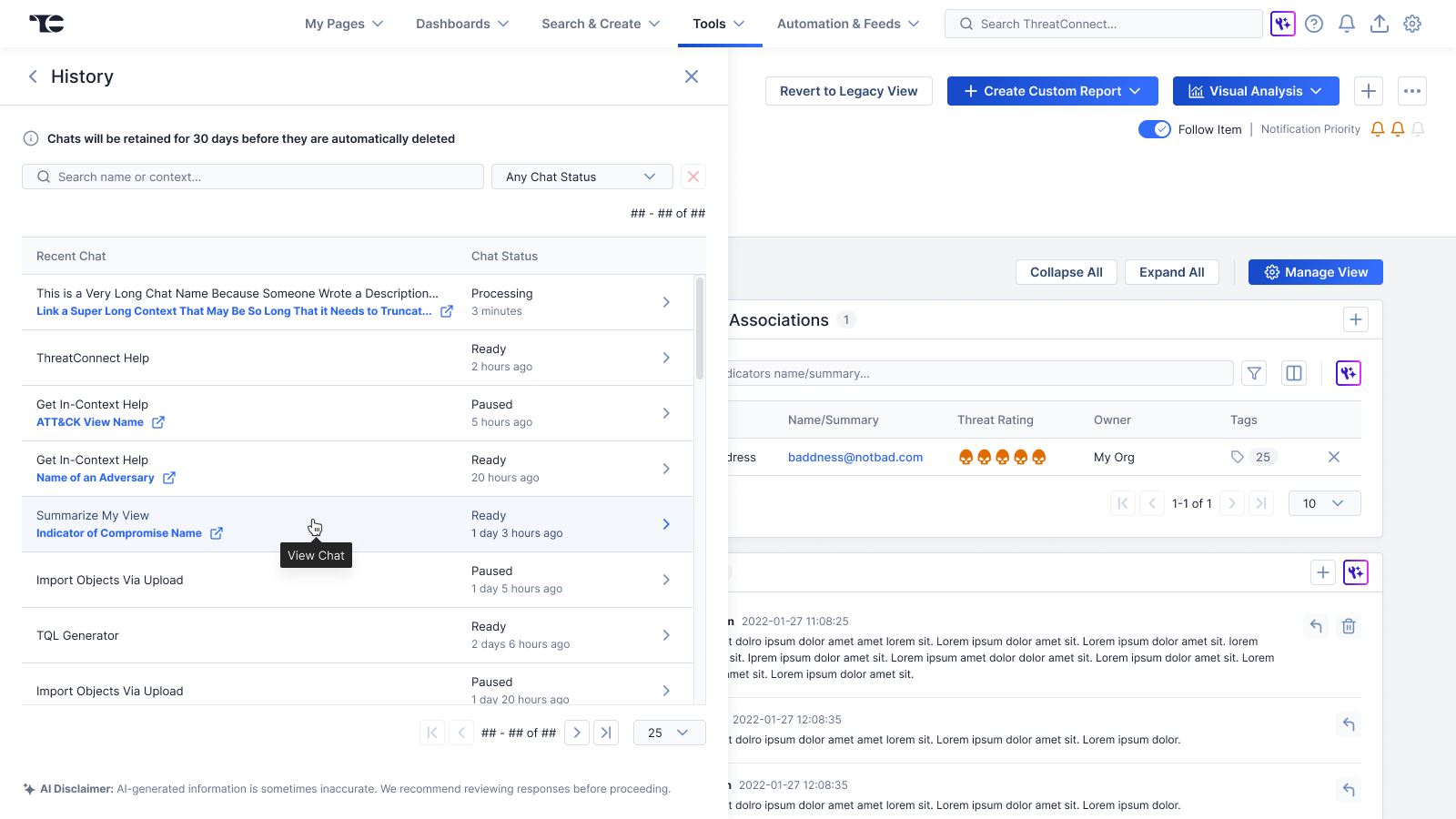
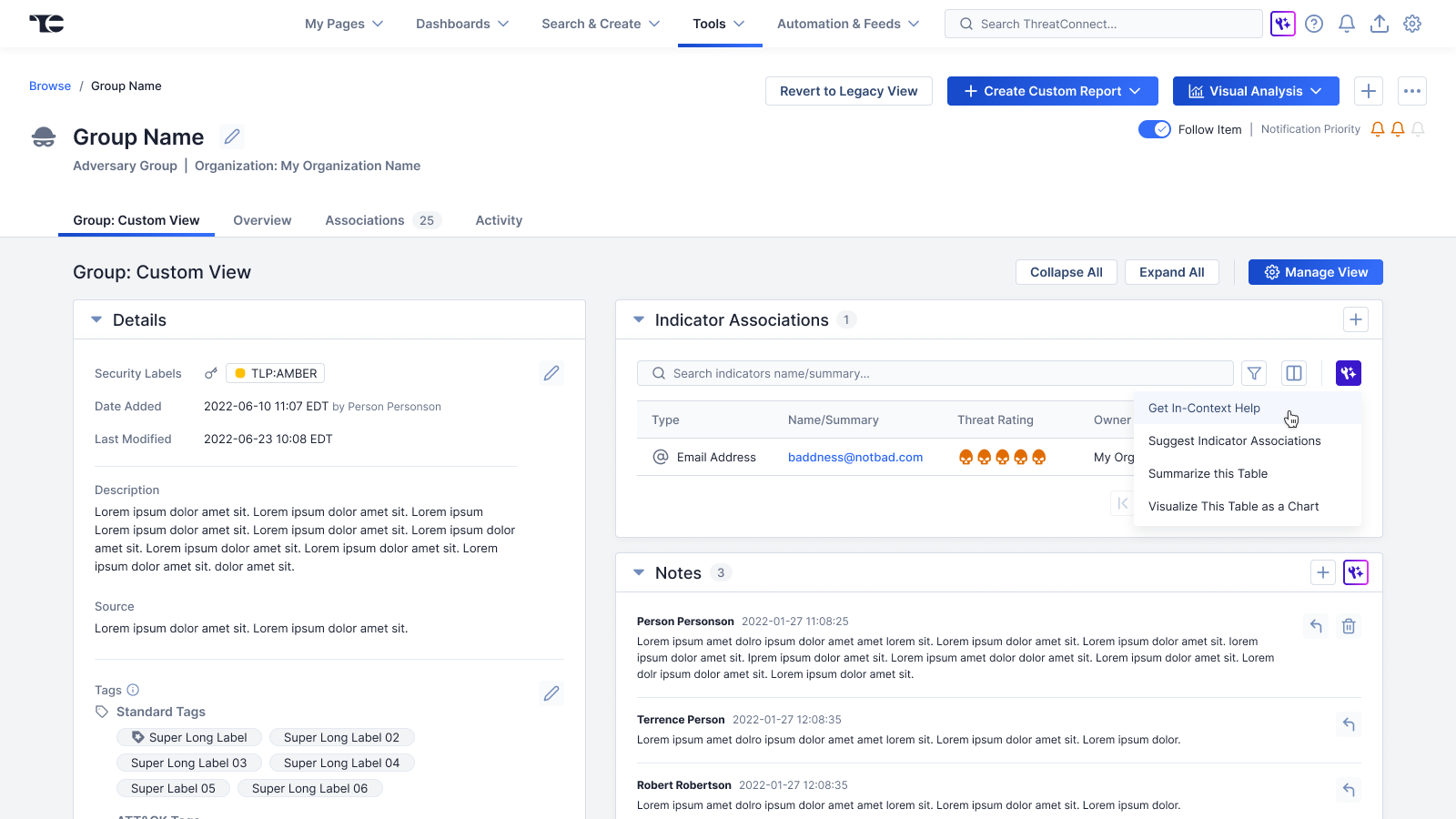
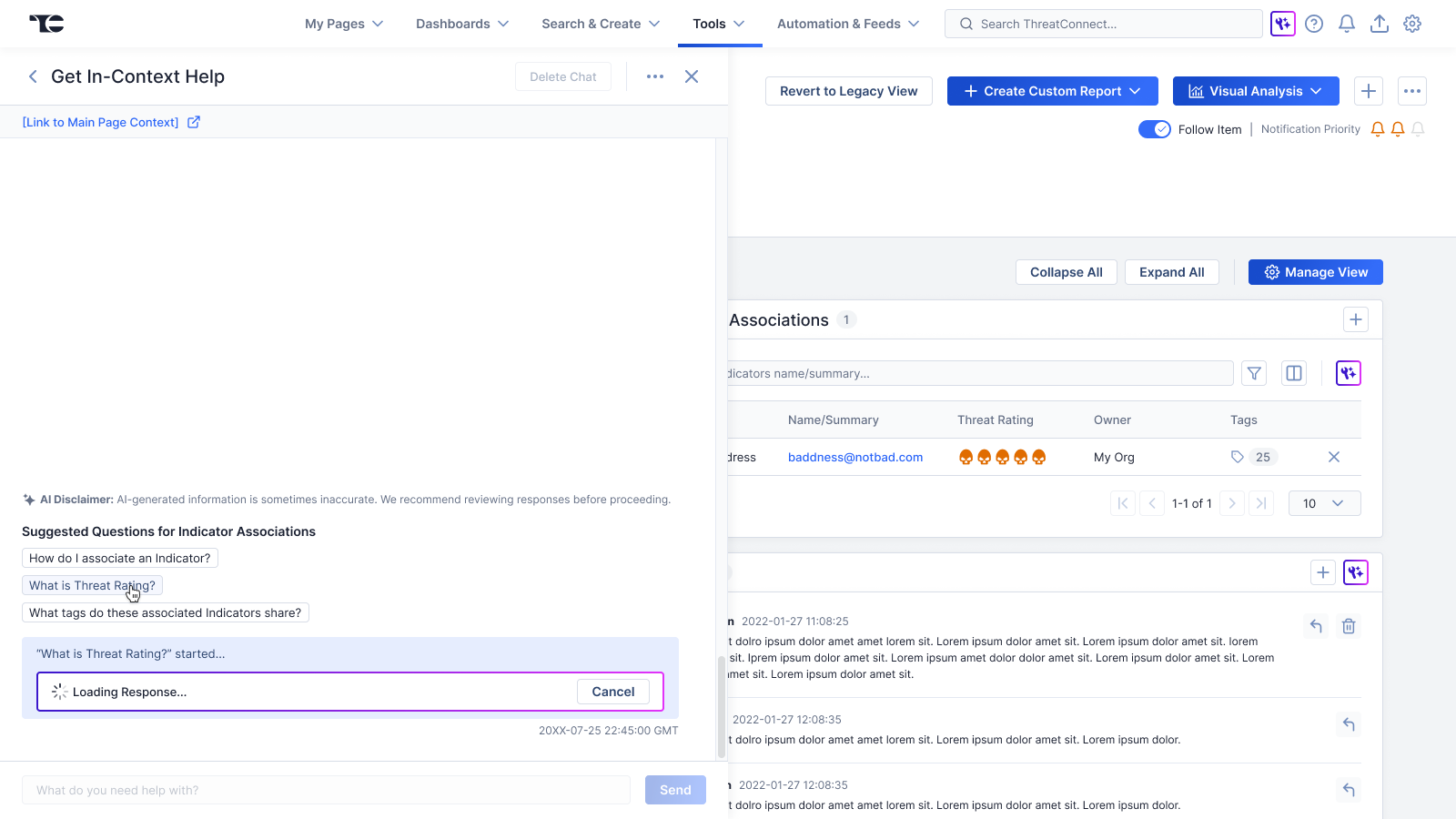
To guarantee an intuitive, zero-risk onboarding vector, our strategy focused on keeping the AI as an entirely contained, optional utility pane that prioritizes total user agency. I collaborated on designing persistent chat history states, contextual action entry points, and suggested shortcut prompts to safely guide users through the initial interaction funnel.
Process & Execution
Feedback-Based Scoping
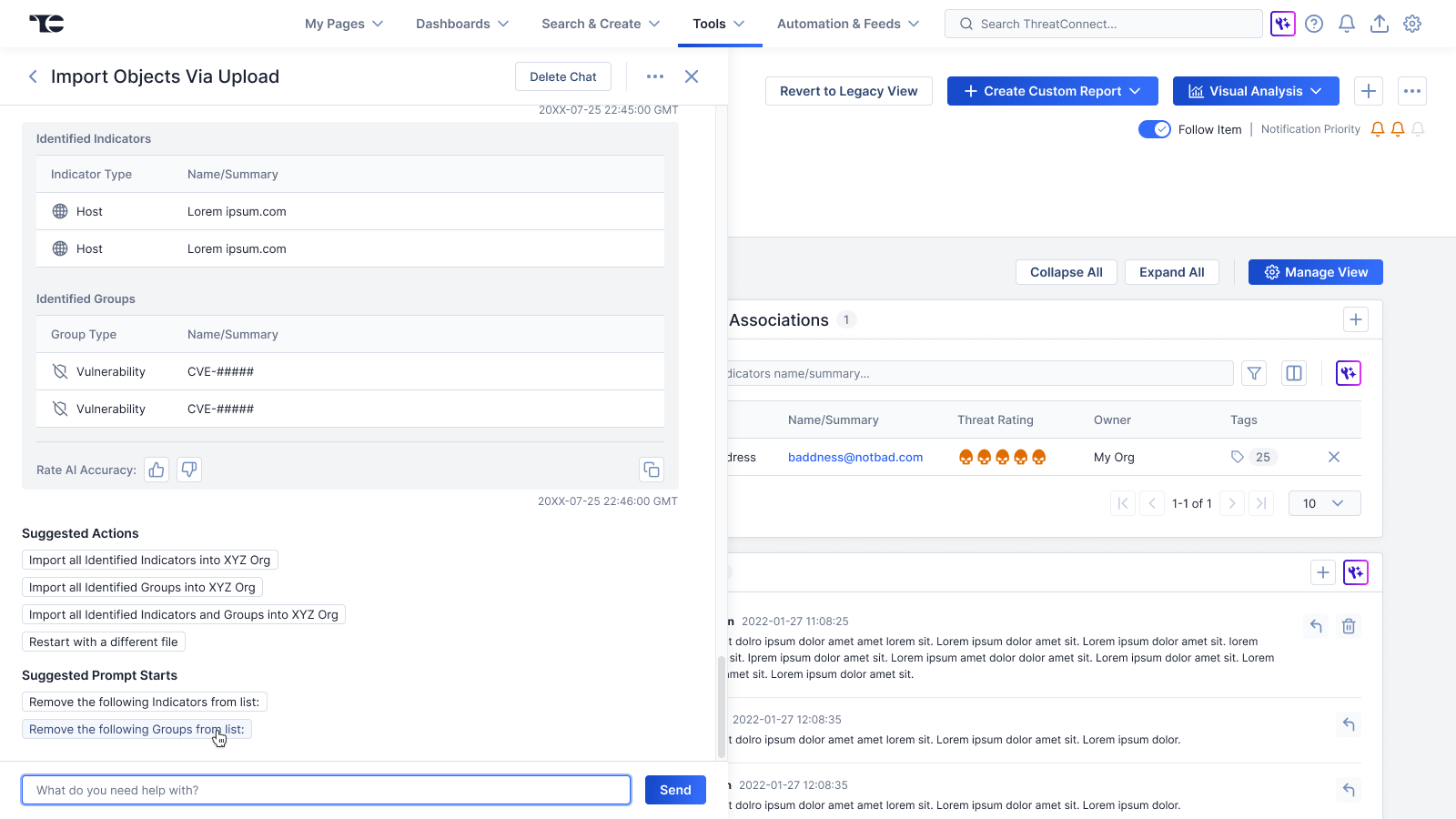
To determine exactly which automated capabilities the agent should perform on the user's behalf, we worked closely with Product Management. We reviewed historical customer feedback in Product Board, and strategically isolated high-value feature requirements (such as automated data importing) for the initial MVP.
Granular Specifications
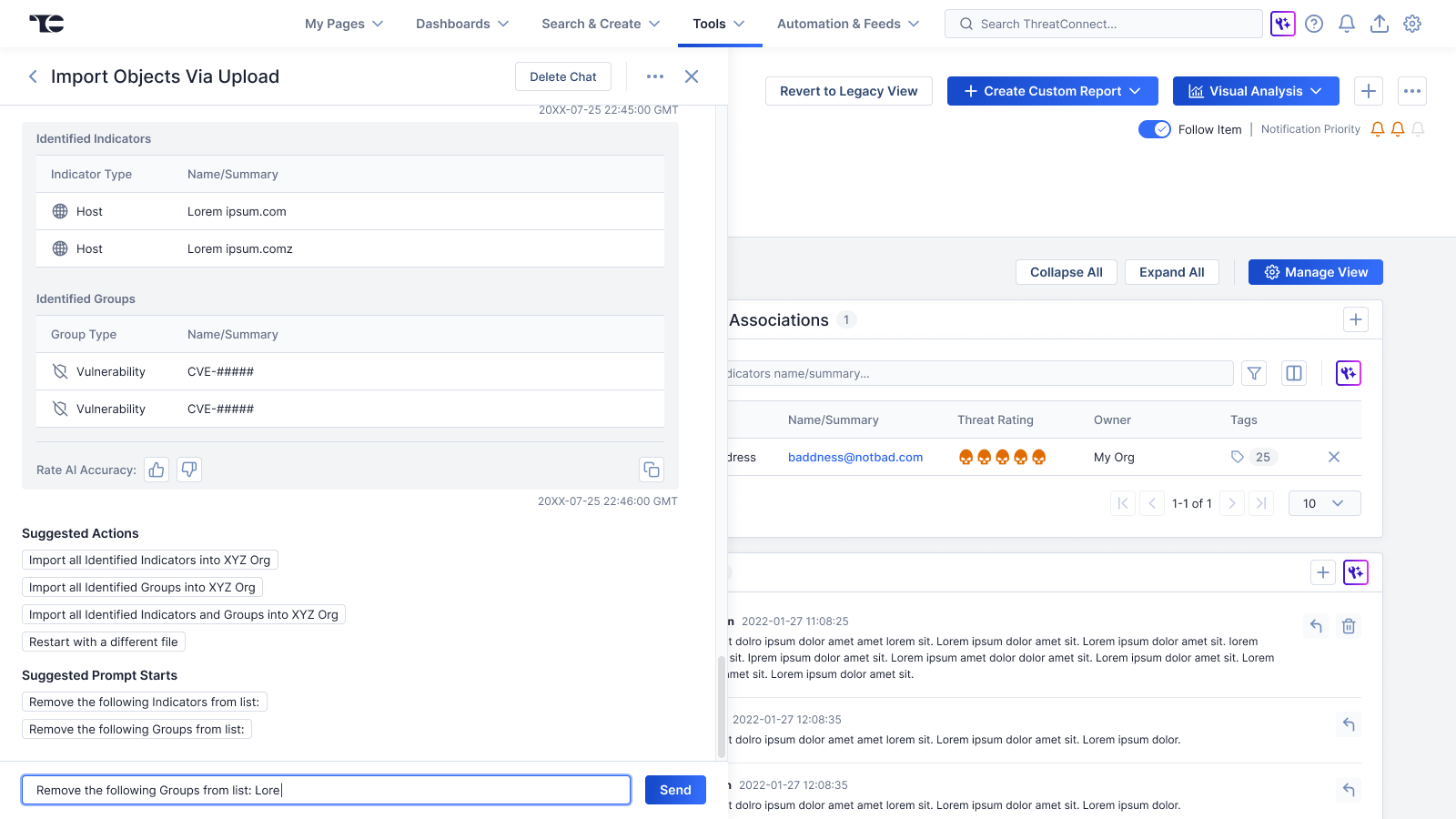
We created extensive visual and interactive specifications to ensure a seamless implementation phase. This included detailing responsive layout rules for full conversational panels, inline contextual helper frames, suggested action arrays, chat log management components, and multi-state data import dialog blocks.
Prompt Analytics Loops
We designed a binary feedback mechanism for every AI response. Analysts could easily mark each output as accurate or inaccurate. These prompt analytics were routed directly to our AI engineering team, providing them with a steady stream of structured, real-world data to systematically refine the AI model, and mitigate hallucinations.
Back to Work List