
CA Technologies
Team Planning
Role
Lead Designer on Project
Cross-Functional Partners
Product Owner, User Researcher, & Frontend Engineers
Core Focus
Friction Reduction, Growth UX/Retention Metrics, User Telemetry, & Layout State Transitions
Overview & Challenge
Project Summary
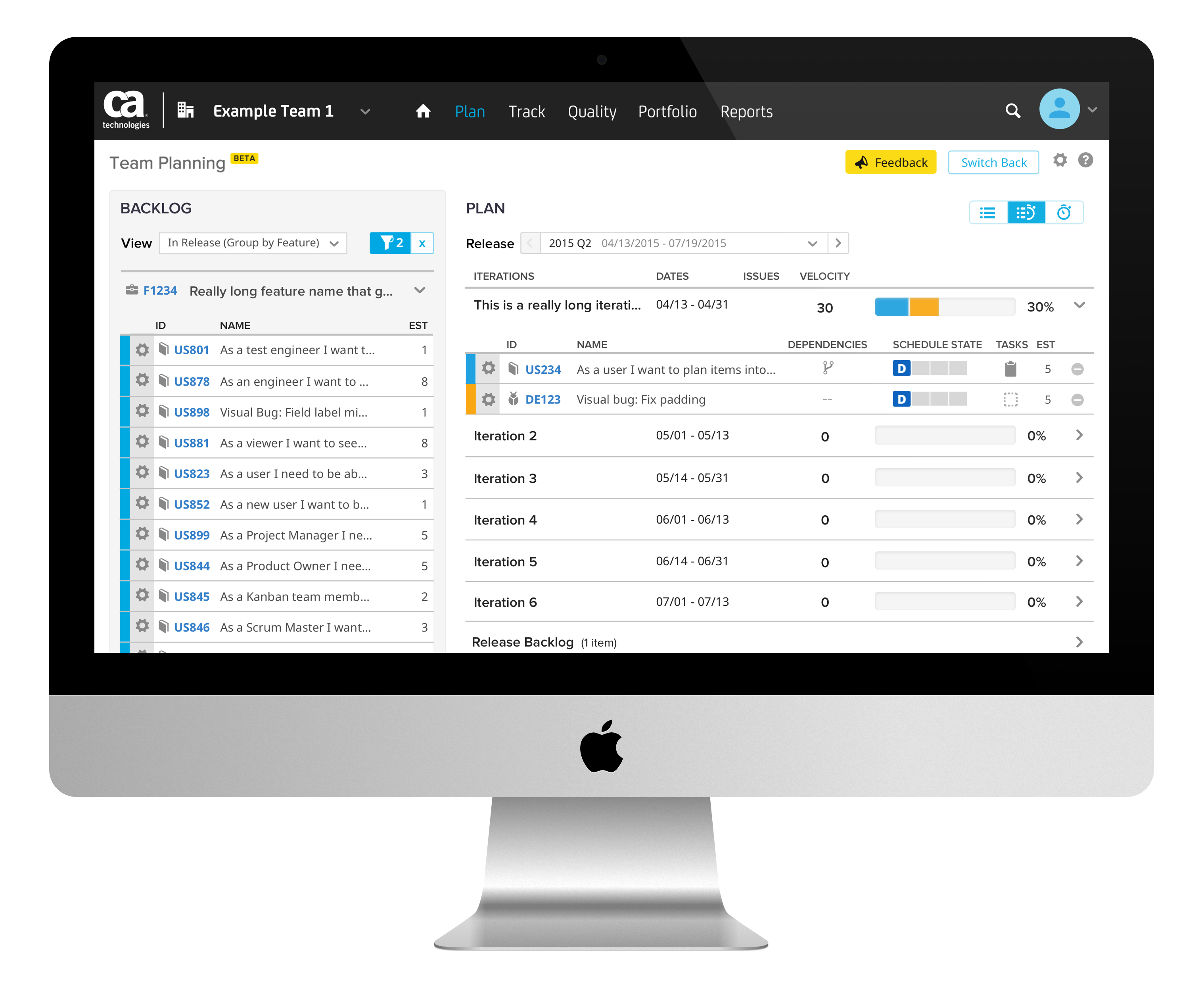
CA Agile Central (formerly Rally Software) is a collaborative, enterprise SaaS platform where engineering and product teams plan, prioritize, and track their work. The Team Planning page allows cross-functional teams to monitor the sprint velocity of active work items and instantly flags when a team's workload exceeds resource capacity. To graduate the page from closed beta to open beta, our core objective was to hit a user retention rate milestone of over 70%. Serving as the lead designer for the project, I achieved this metric by restructuring the primary workspace layouts, optimizing backlog discoverability, and establishing filtering defaults while maintaining strict feature parity with the legacy version, as not to lose functionality.
The Challenge
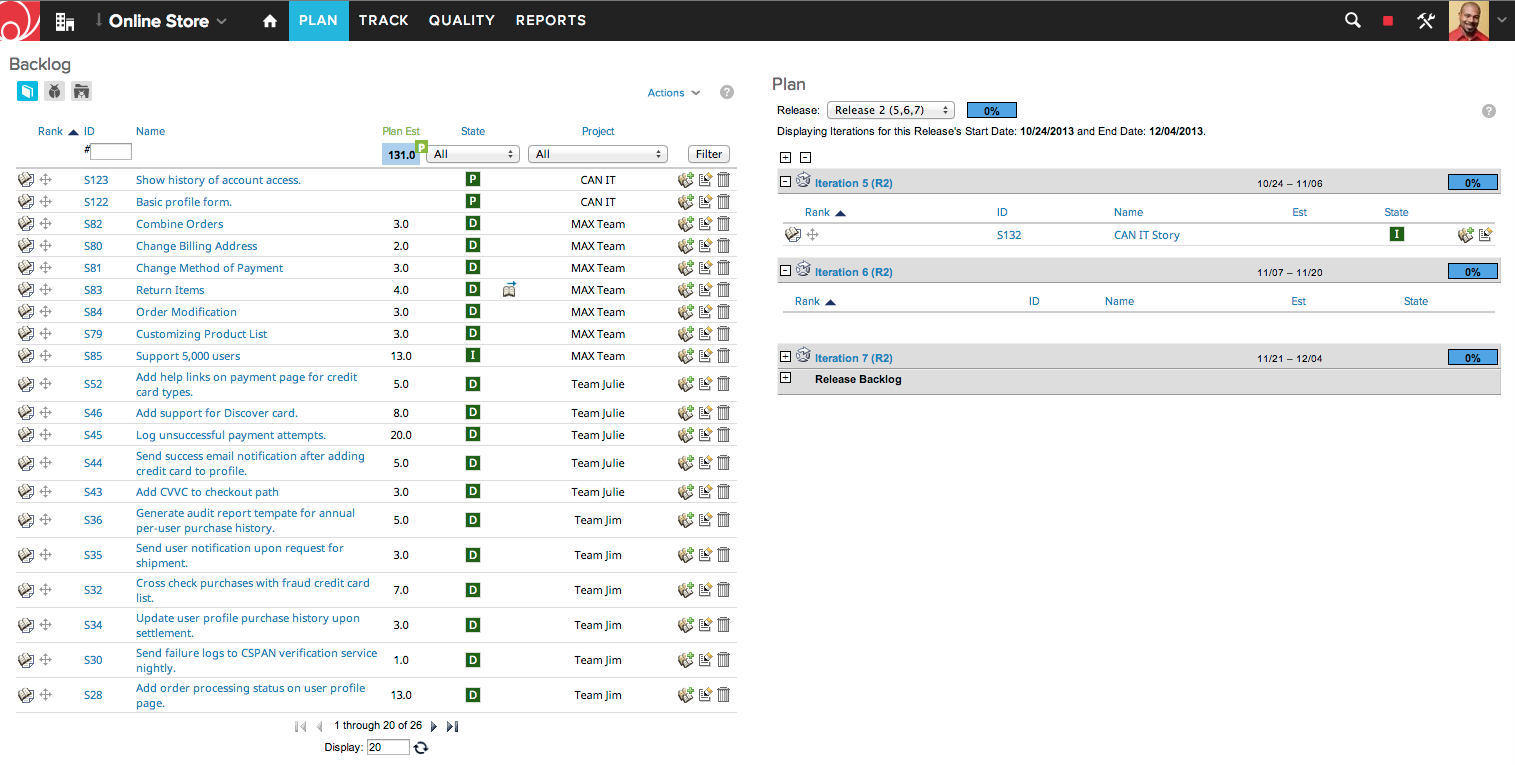
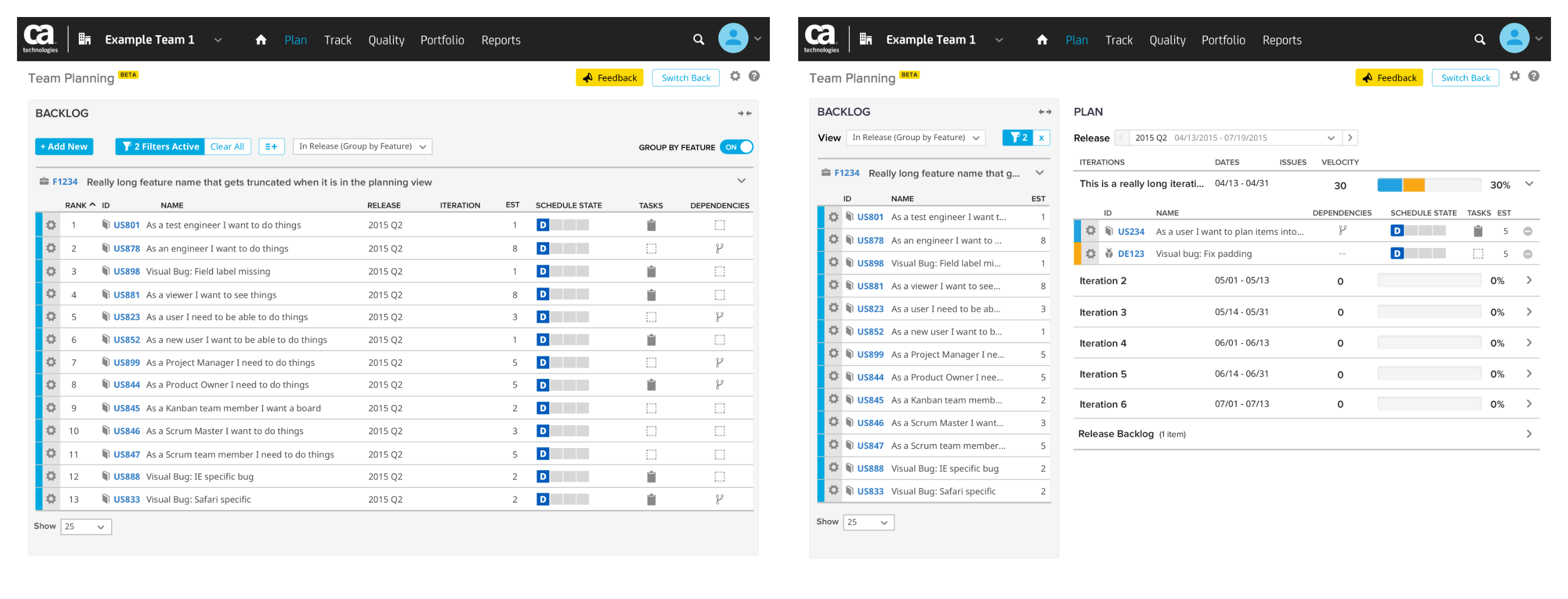
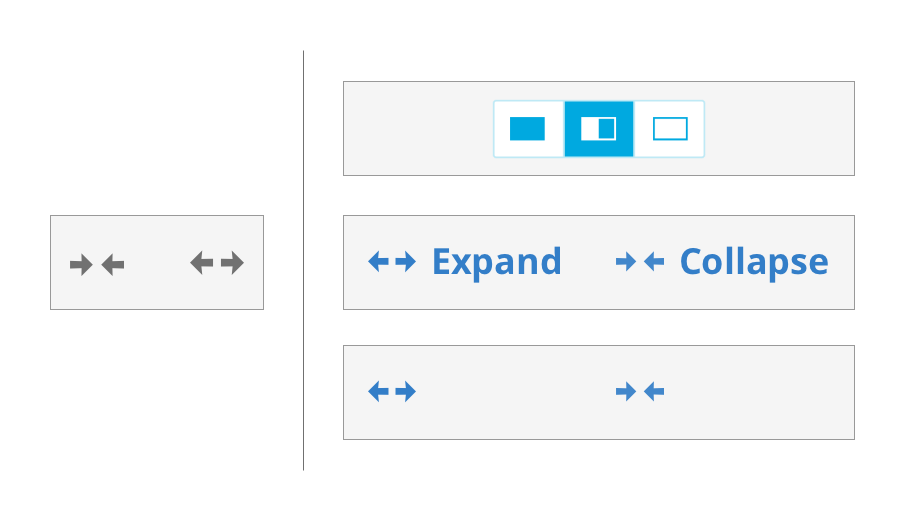
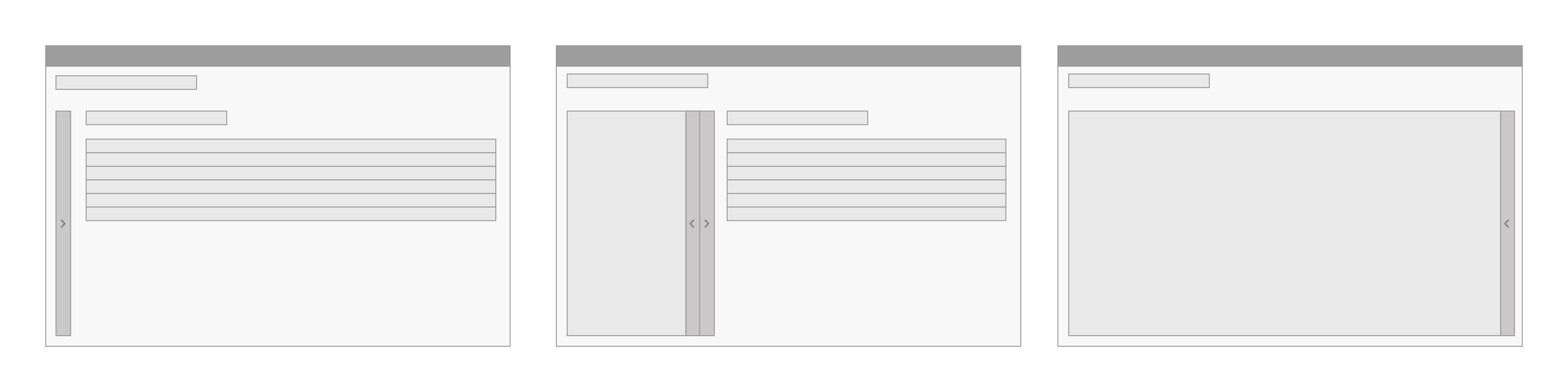
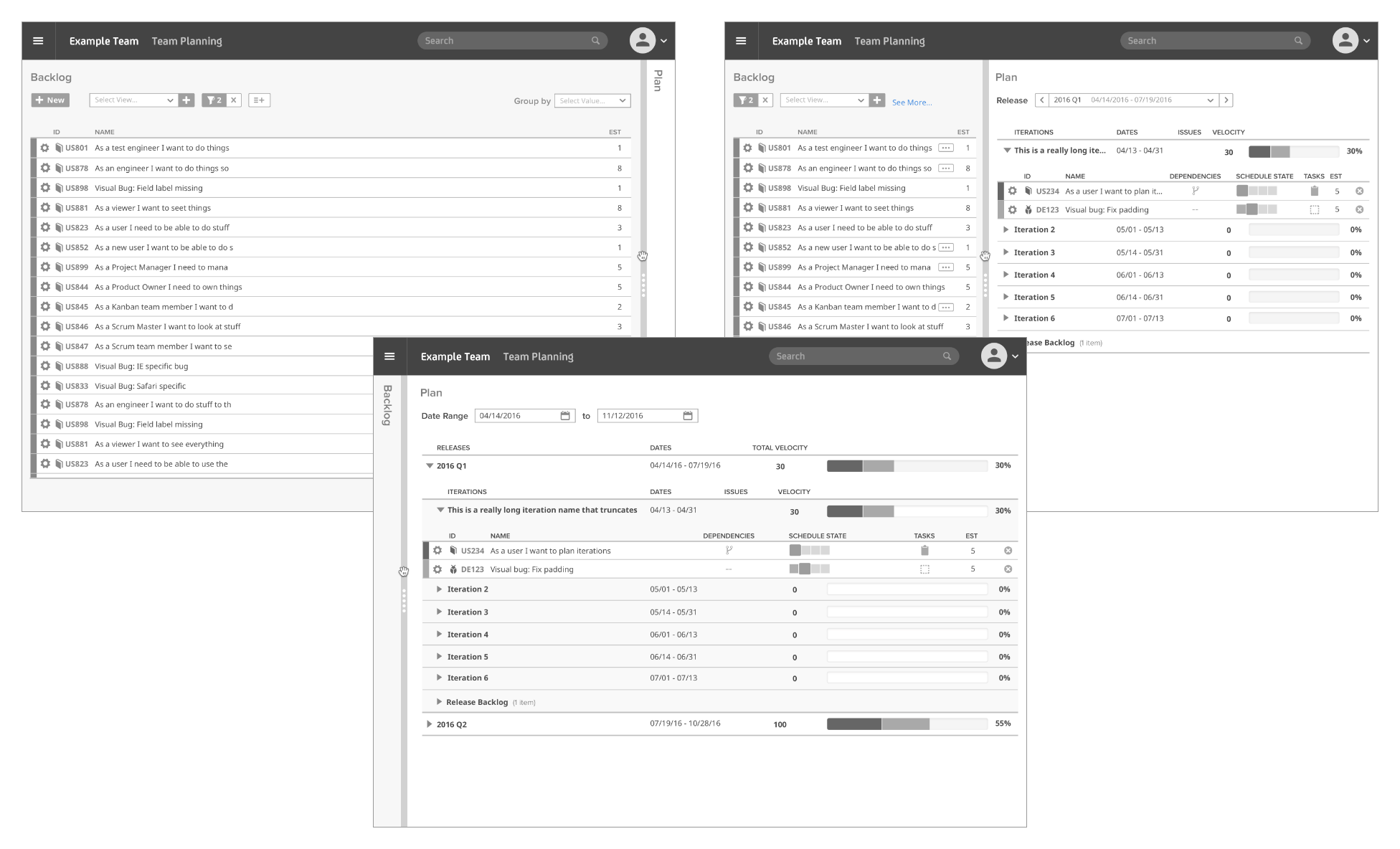
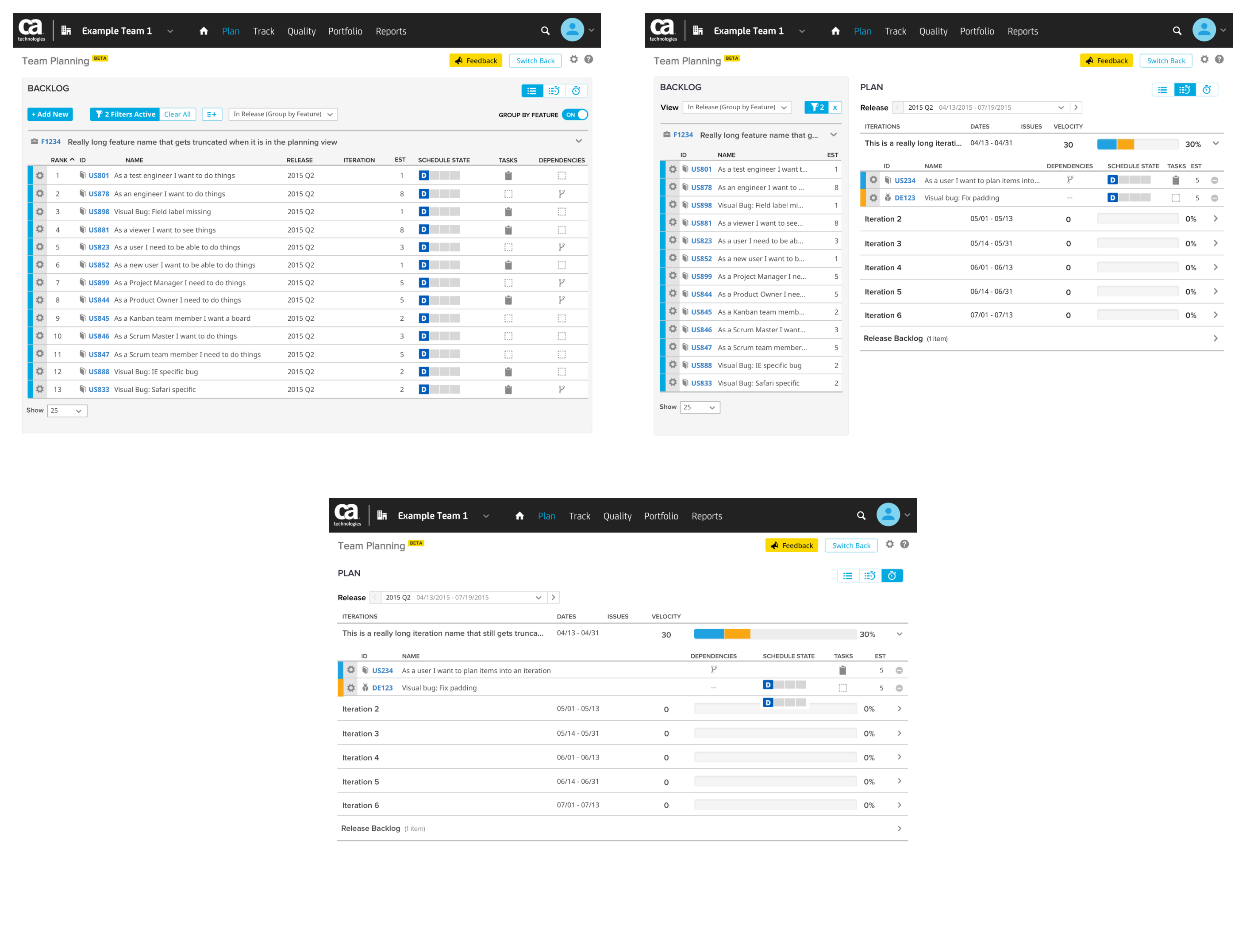
Prior to the overhaul, the team's backlog controls and workspace configuration panels suffered from low discoverability. The lack of an advanced filtering system caused users to be overwhelmed by massive backlogs. To solve this sustainably, our strategy targeted layout transparency and panel control flexibility. To address workspace compression, I designed a fluid, customizable panel separator that empowers teams to dynamically drag and adjust their workspace split ratios to fit their needs.
Process & Execution
Data-Driven Iteration
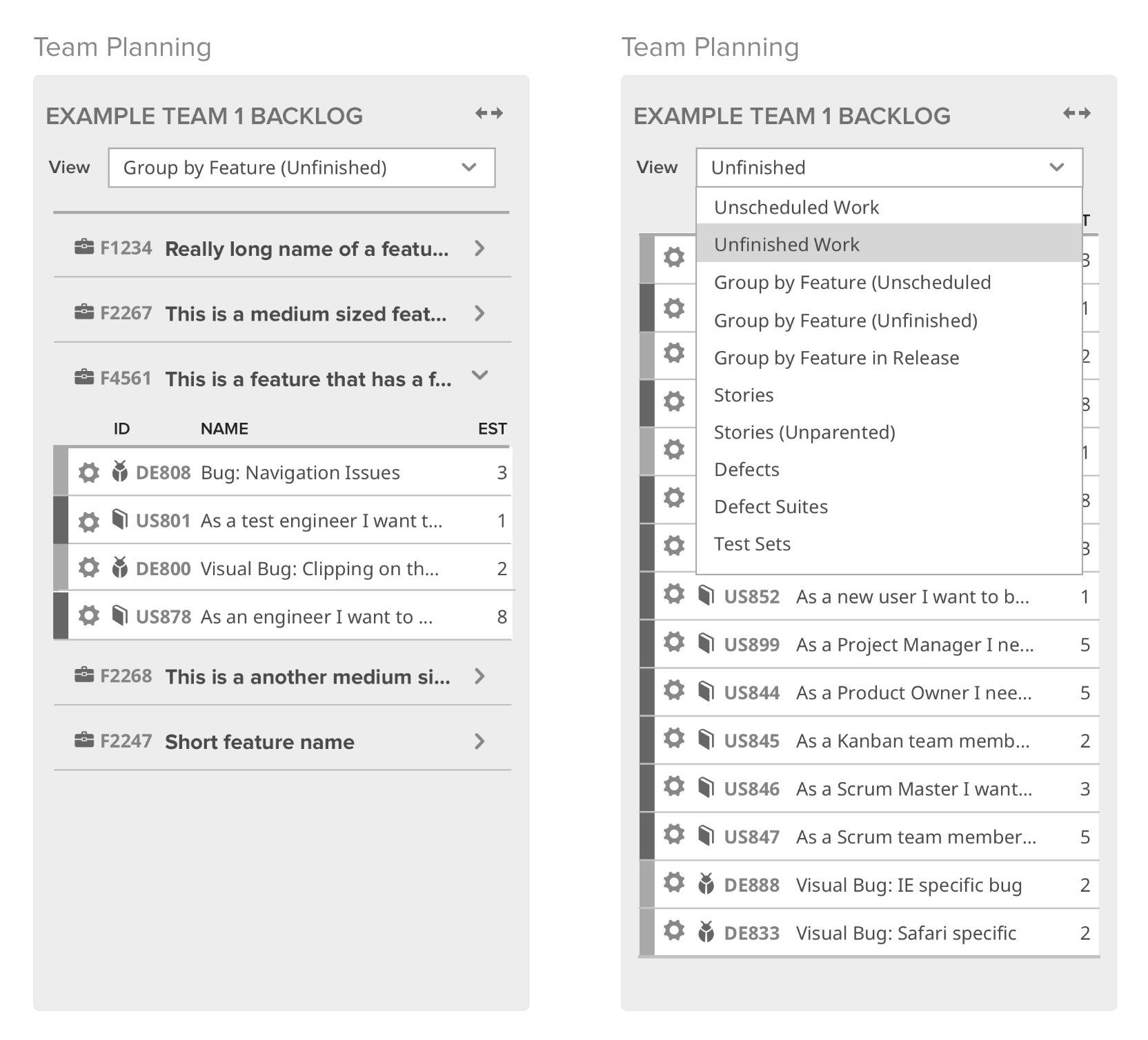
Working side-by-side with our dedicated User Researcher and Product Owner, we conducted targeted user interviews across companies of varying scales. By validating interactive low-fidelity layouts against live customer cohorts, we leveraged empirical feedback to systematically map out a matrix of edge-case scenarios, giving rise to ten indispensable default dropdown filters that streamlined the initial view.
Scalability & Optimization
To ensure long-term product alignment, the Team Planning UI was evolved into a more modular workspace. Because customer testing confirmed the core was performing well, the framework was preserved and focus shifted to optimizing data density. The page was split by a panel separator that was draggable, empowering users to adjust their workspace to fit their needs. The dragging interaction mirrors the core mental model of the page, where teams drag work items across columns during planning cycles.
Priority Shift Handoff
Due to an organizational priority shift, the project was transitioned to another internal product team. To guarantee that the incoming team could maintain our 70%+ retention momentum without friction, I organized all user research insights, design details, and technical requirements into a single location. This structured delivery of information successfully blocked any knowledge loss.
Back to Work List